


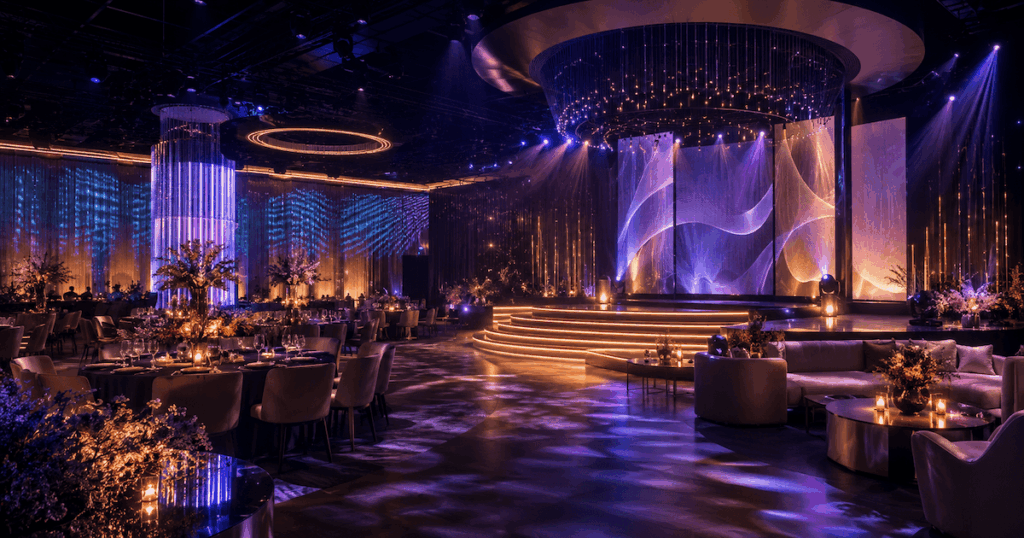
Lighting is no longer something you add at the end of an event plan. In 2026, event lighting is becoming one of the most important parts of the guest experience. It shapes the mood, guides attention, supports the theme and helps transform a venue from a simple space into a memorable environment.
The biggest event lighting design trends 2026 are moving toward immersive atmospheres, layered lighting, warm ambient effects, dynamic LED visuals, projection mapping, smarter lighting control and more sustainable choices. For weddings, lighting is becoming softer and more emotional. For corporate events, it is becoming more branded and experience-driven. For private parties, it is becoming more playful, flexible and interactive.
A well-designed lighting plan can make a dinner feel more intimate, a product launch feel more premium, a wedding ceremony feel more romantic and a dance floor feel more energetic. The key is not to use every trend at once, but to choose lighting ideas that match the purpose, style and flow of your event.
What Are the Biggest Event Lighting Design Trends 2026?
The biggest lighting trends for 2026 focus on creating atmosphere with more intention. Instead of using basic lighting only to brighten a venue, event hosts are now using lighting to tell a story, highlight important moments and make the space feel more personal.
Several event design sources point to the same direction: lighting is becoming more immersive, more layered and more connected to the overall event experience. Corporate event trends are also shifting from simple decorative styling to branded environments that feel more memorable and emotionally engaging.
Some of the most important trends include:
- Immersive lighting that surrounds guests with mood and movement
- Layered ambient lighting for a softer, more premium atmosphere
- LED walls and projection mapping for visual storytelling
- Smart lighting control that changes with the event schedule
- Brand-colored lighting for corporate events and product launches
- Candle-inspired glow, chandeliers and warm uplighting for weddings
- More sustainable lighting choices using efficient LED technology
- Photo-friendly lighting zones designed for social media moments
The main idea is simple: lighting should not feel random. It should support what guests are supposed to feel at each stage of the event.
For example, a welcome reception may need soft and inviting lighting. A keynote session needs clear stage lighting and good visibility. A wedding dinner may need warmth and intimacy. A dance floor may need stronger movement, color and contrast.
In 2026, the best event lighting designs will feel flexible. They will change naturally as the event moves from one moment to the next.
Immersive Lighting Will Become a Key Part of Event Storytelling
Immersive lighting is one of the strongest trends for 2026 because events are becoming less about decoration and more about experience. Guests no longer remember only what a venue looked like. They remember how the space made them feel.
Lighting can help create that feeling from the moment guests arrive. It can make an entrance feel dramatic, a dining area feel warm, a stage feel powerful or a party feel energetic.
From decoration to experience
In the past, lighting was often treated as a technical detail. The goal was simple: make sure the room was bright enough and the stage was visible.
Now, lighting has a much bigger role. It can help create emotional transitions throughout the event.
For example:
- Arrival: soft lighting can make guests feel welcomed and relaxed.
- Opening moment: stronger lighting can draw attention to the stage or main area.
- Dinner or ceremony: warm tones can create intimacy and elegance.
- Entertainment: moving lights, color changes or LED visuals can increase energy.
- Final moment: lighting can create a memorable closing scene or photo opportunity.
This kind of lighting design makes the event feel planned from beginning to end, rather than simply decorated.
Where immersive lighting works best
Immersive lighting can work for many types of events, but it is especially useful when the event needs a strong emotional or visual impact.
It works well for:
- Luxury weddings
- Product launches
- Brand activations
- Gala dinners
- Themed parties
- Award ceremonies
- Outdoor evening events
- Private celebrations with a clear concept
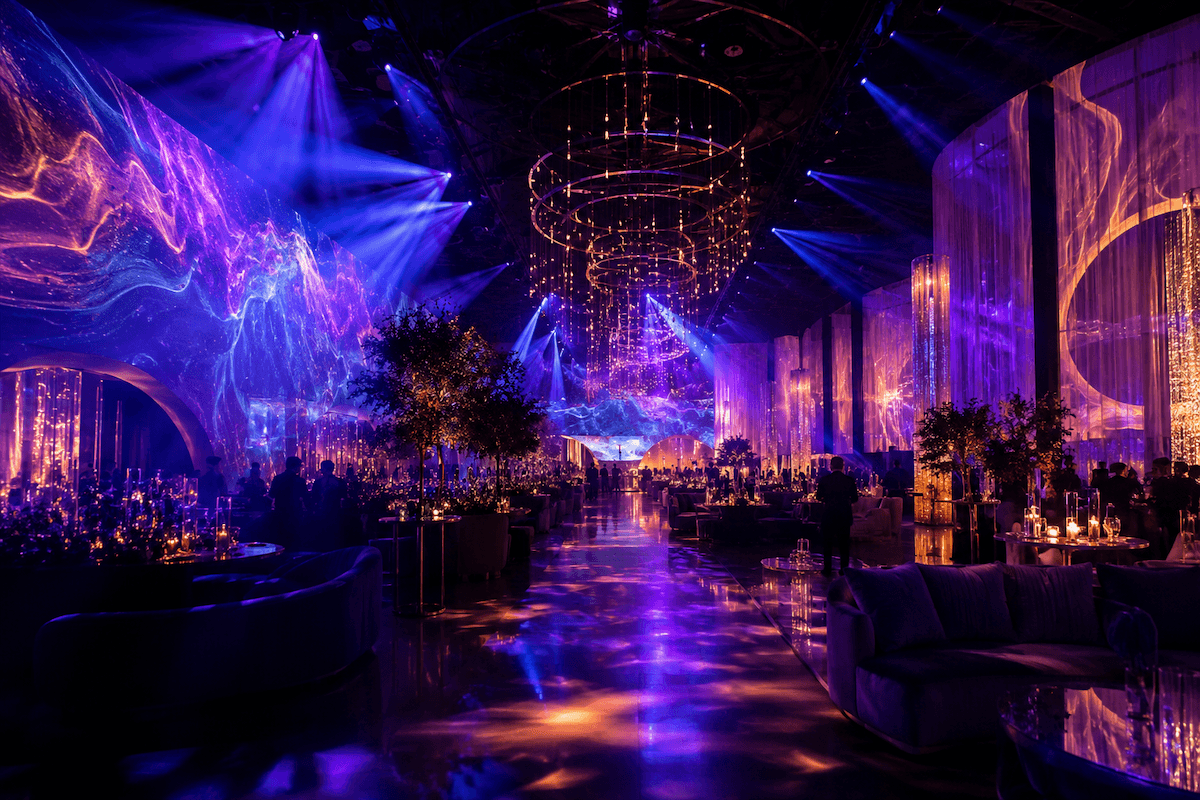
Immersive event design is also becoming more connected to scenic design, projection, sound and digital visuals. Instead of treating lighting as a separate service, many modern events now combine lighting with the full environment to create a more sensory-rich guest experience.
The most important thing is balance. Immersive lighting should support the event, not overwhelm it. A beautiful event does not need constant flashing lights or dramatic effects every minute. Sometimes, the most powerful lighting design is slow, subtle and carefully timed.
Layered and Ambient Lighting Will Replace One-Dimensional Setups
One of the most elegant event lighting design trends for 2026 is the move toward layered and ambient lighting. This is especially important for weddings, dinners, private parties and luxury celebrations.
Layered lighting means using more than one type of light to create depth. Instead of lighting the whole venue with one flat source, the space is built with different layers of brightness, warmth and focus.
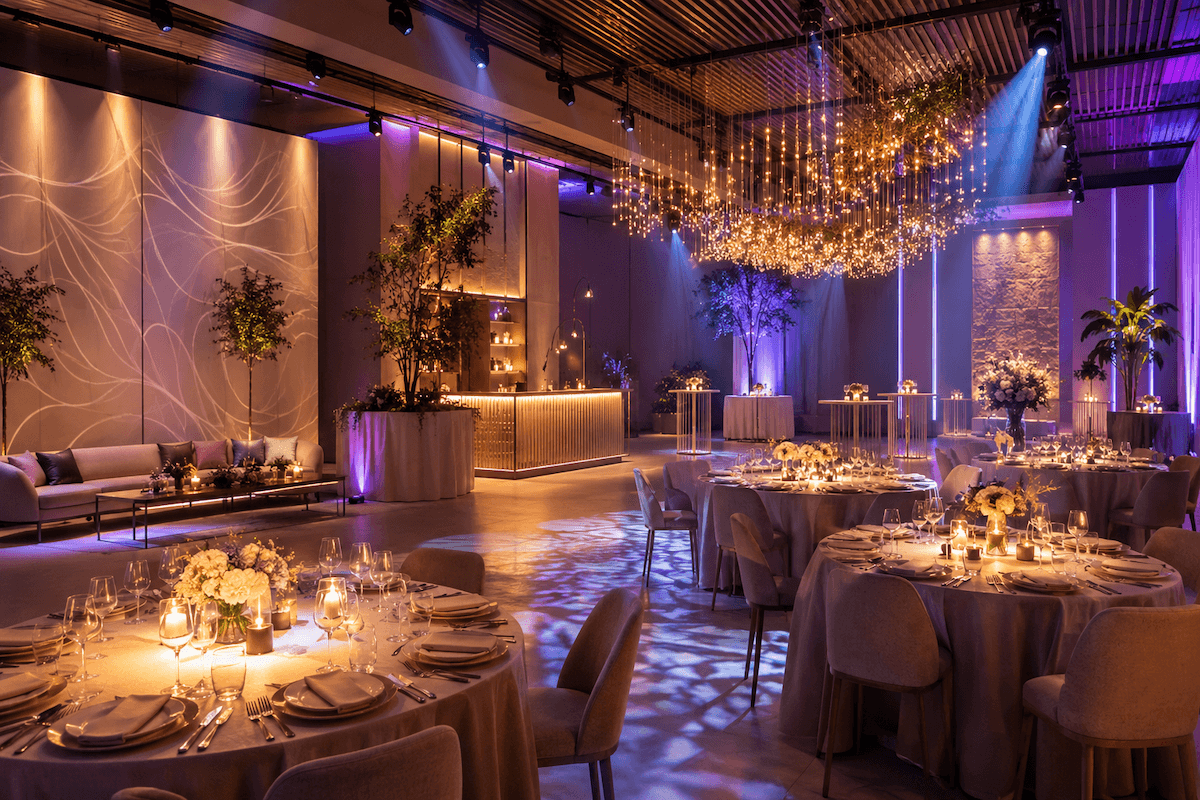
Wedding trend reports for 2026 highlight warm wall washes, chandeliers, pendant lighting, café strands and candlelight-inspired glow as part of the move toward more emotional and layered lighting design.
A layered lighting setup may include:
- Soft uplighting around walls or columns
- Candlelight or candle-style LED accents on tables
- Pendant lights or chandeliers above dining areas
- Focused lighting for flowers, centerpieces or cake displays
- Warm light around entrances and lounge zones
- More colorful lighting later for the dance floor

Why layered lighting feels more premium
Layered lighting feels more premium because it gives the venue depth. A room with only one type of light can look flat, even if the décor is expensive. But when lighting is layered properly, the space feels softer, more dimensional and more intentional.
For example, a wedding dinner can feel warmer when table lighting is soft, the walls have a gentle glow and floral arrangements are highlighted with subtle accents. A corporate gala can feel more refined when the stage, brand wall, dining area and entrance each have their own lighting mood.
Layered lighting also helps with photography. Harsh lighting can make people look tired or create strong shadows. Soft layered lighting is usually more flattering for faces, décor and candid event photos.
A simple way to think about layered lighting is:
- Ambient light creates the overall mood.
- Accent light highlights important details.
- Functional light helps people move, eat, read or watch comfortably.
- Dynamic light adds energy when the event becomes more active.
Not every event needs all four layers, but thinking this way helps make the lighting plan more complete.
LED Walls, Projection Mapping and Dynamic Backdrops Will Keep Growing
LED walls and projection mapping will continue to grow in 2026 because they give event planners more creative control over the visual atmosphere. They can turn a plain wall into a branded backdrop, a dinner room into a themed environment or a product launch into a dramatic reveal.
However, the best use of LED and projection is not just “make the screen bigger.” The goal should be to support the story of the event.
For corporate events, this may mean using LED visuals to reinforce the brand message. For weddings, it may mean soft projected textures, subtle movement or romantic visual scenes. For private parties, it may mean changing the backdrop as the night becomes more energetic.

Best use cases for LED and projection
LED walls and projection mapping are useful when the event needs strong visual impact or flexible design.
They work especially well for:
- Product launches
- Corporate conferences
- Award ceremonies
- Fashion shows
- Gala dinners
- Themed parties
- Large weddings
- Stage-focused events
For a product launch, projection mapping can help reveal the product in a more dramatic way. For a corporate conference, LED walls can make presentations feel more polished. For a gala dinner, slow-moving visuals can create a beautiful atmosphere without distracting guests.
Event technology discussions for 2026 continue to highlight LED walls, projection mapping and advanced visual systems as tools that help events become more engaging, branded and memorable.
Keep screens elegant, not overwhelming
One common mistake is using LED walls that are too bright or too busy. When visuals move too fast, they can distract from the people, food, speeches or performances.
A more elegant approach is to use visual content that matches the mood of the event:
- Soft gradients for luxury dinners
- Slow animated textures for weddings
- Brand patterns for corporate events
- Scenic visuals for themed parties
- Minimal motion during formal moments
- Stronger visuals only during entertainment or reveals
The best LED and projection designs feel integrated into the event. They should not look like a random screen placed behind the stage.
Smart Lighting and Automation Will Make Events More Responsive
Smart lighting and automation are becoming more important because modern events often have many different moments in one schedule. A single event may include guest arrival, welcome drinks, speeches, dinner, entertainment, networking and an after-party.
Each part of the event needs a different mood. Smart lighting makes those changes smoother.
Instead of manually adjusting lights in a way that feels sudden or awkward, lighting can be programmed to shift naturally throughout the event.
For example:
- The room can become warmer during dinner.
- The stage can brighten during speeches.
- Brand colors can appear during a product reveal.
- The dance floor can become more colorful after formal moments end.
- Outdoor areas can become softer as the night goes on.

What this means for event hosts
For most event hosts, the technical side of smart lighting is not the main concern. What matters is how it improves the guest experience.
Smart lighting can help create:
- Smoother transitions between different parts of the event
- Better timing for speeches, performances and reveals
- More polished atmosphere without obvious manual adjustments
- Stronger emotional impact during key moments
- Better control across large venues or multiple zones
This is especially helpful for corporate events and weddings, where the mood needs to shift without interrupting the flow.
Responsive lighting should still feel human
Even though technology is improving, lighting should not feel cold or mechanical. The best lighting design still feels human. It supports the natural rhythm of the event.
For example, during a wedding vow exchange, the lighting should feel soft and emotional, not overly technical. During a corporate keynote, lighting should make the speaker look clear and confident, not distract the audience with unnecessary movement.
Smart lighting works best when it is planned around the event timeline, not just around what the equipment can do.
Brand-Colored Lighting Will Be More Important for Corporate Events
For corporate events in 2026, lighting will play a bigger role in brand experience. A brand is no longer shown only through logos, banners or printed materials. It can also be expressed through color, atmosphere and the way guests move through the space.
Brand-colored lighting can make a venue feel more connected to the company identity. It can also help create stronger visual consistency across the event.
Corporate décor trend sources for 2026 highlight the use of lighting to define spaces, align with brand color schemes and highlight focal areas such as centerpieces, stages and branded environments.
Good places to use brand-colored lighting include:
- Entrance areas
- Registration desks
- Stage backgrounds
- Product display zones
- Photo backdrops
- Sponsor walls
- Networking lounges
- Cocktail areas

How to avoid overusing brand colors
Brand lighting should be used carefully. If the whole venue is covered in strong brand colors all night, the result can feel heavy or visually tiring.
A better approach is to use brand colors as accents.
For example, if a company’s main color is blue, the lighting plan does not need to make every wall blue. The event can use neutral warm lighting for dining, soft blue accents around the stage and stronger blue lighting during brand moments.
This feels more premium and more comfortable for guests.
A good brand lighting plan usually combines:
- Neutral base lighting for comfort and elegance
- Brand accent lighting for identity
- Focused highlights for key areas
- Dynamic lighting moments for reveals, entertainment or transitions
Brand lighting should support photos and video
Corporate events are often photographed and filmed for marketing. Lighting should support that goal.
Poor lighting can make photos look flat, too dark or overly colored. Strong colored lighting can also affect skin tones and make people look unnatural.
A professional lighting plan should consider:
- Speaker visibility
- Stage photography
- Guest photos
- Video recording
- Sponsor visibility
- Social media content
- Product display clarity
This is where event lighting becomes part of the marketing strategy, not just part of the decoration.
Sustainable Lighting Choices Will Matter More in 2026
Sustainability is becoming more important across event planning, and lighting is part of that conversation. In 2026, many event hosts want beautiful experiences, but they also want smarter choices that reduce waste and unnecessary energy use.
Sustainable lighting does not mean the event has to look simple or plain. It means the lighting plan should be efficient, purposeful and suitable for the venue.
Lighting trend discussions for 2026 and 2027 continue to connect modern lighting with sustainability, flexible design and long-term usability.
Practical sustainable lighting choices may include:
- Using energy-efficient LED fixtures
- Avoiding excessive lighting where it is not needed
- Choosing reusable rental equipment
- Designing lighting around the actual venue layout
- Reducing single-use decorative lighting elements
- Using programmable lighting instead of building multiple physical backdrops
- Planning outdoor lighting carefully to avoid waste and glare

Sustainable can still feel luxurious
There is a common misunderstanding that sustainable event design means less beauty. In reality, a thoughtful lighting plan can feel more luxurious because every element has a clear purpose.
For example, instead of filling a venue with too many decorations, lighting can highlight architectural details, floral arrangements, table settings and scenic elements that already exist. This creates a rich atmosphere without adding unnecessary materials.
For outdoor events, sustainable lighting can also create a softer and more natural feeling. Warm pathway lights, gentle tree lighting and low-glare fixtures can make the event feel elegant without overpowering the environment.
Plan lighting early to avoid waste
One of the best ways to make lighting more efficient is to plan it early.
When lighting is added at the last minute, the setup may become less organized. The team may need extra fixtures, extra cables or extra work because the lighting was not considered in the original design.
When lighting is planned from the beginning, it can work together with:
- Venue layout
- Guest flow
- Stage position
- Table arrangement
- Décor
- Photography
- Video
- Entertainment schedule
This creates a better result and often avoids unnecessary changes later.
How to Choose the Right Lighting Style for Your Event
Trends are useful, but not every trend is right for every event. The best lighting style depends on your event type, venue, guest experience and overall mood.
A wedding, corporate conference and private birthday party should not use the same lighting plan. Each event has a different purpose.

For weddings
Wedding lighting in 2026 is moving toward warmth, softness and emotional atmosphere. Couples are choosing lighting that makes the event feel intimate and personal, not overly staged.
Good wedding lighting ideas include:
- Warm ambient lighting for dinner
- Candle-inspired table glow
- Soft spotlights for ceremony moments
- Chandeliers or pendant installations
- Gentle uplighting around walls or trees
- Romantic lighting for the couple’s entrance
- A stronger lighting shift for the dance floor
The goal is to make each part of the wedding feel connected, from ceremony to dinner to celebration.
For corporate events
Corporate event lighting should support communication, branding and professionalism. It needs to look impressive, but it also needs to be practical.
Important lighting areas include:
- Stage lighting so speakers look clear and confident
- Brand accent lighting to reinforce identity
- Product lighting for displays or launch moments
- Networking zone lighting to make guests feel comfortable
- Photo and video lighting for marketing content
Corporate lighting should not be too dark, too colorful or too distracting during important sessions. The lighting should help guests focus on the message.
For private parties
Private parties allow more creative freedom. Lighting can be more playful, colorful and interactive.
Good ideas include:
- Mood-based color changes
- A dramatic entrance glow
- Photo-friendly lighting corners
- Stronger dance floor lighting
- Interactive or music-responsive lighting
- Warm lounge lighting for conversation areas
For private celebrations, the lighting should match the personality of the host. A luxury birthday dinner may need soft, elegant lighting. A themed party may need bold color and movement. A beach party may need warm outdoor lighting that feels relaxed and natural.
Questions to ask before choosing your lighting style
Before choosing a lighting direction, it helps to ask:
- What should guests feel when they enter the venue?
- Which moments need the most attention?
- Will there be speeches, performances or reveals?
- Does the event need to look good in photos and videos?
- Should the lighting feel romantic, luxurious, modern, playful or branded?
- Will the event change mood from day to night?
- Are there outdoor areas that need lighting?
- Does the venue already have lighting limitations?
These questions help turn lighting trends into a real plan.
Final Thoughts on Event Lighting Design Trends 2026
The most important thing to understand about event lighting design trends 2026 is that lighting is becoming more emotional, more flexible and more connected to the full event experience. It is not just about making a venue brighter. It is about shaping the way guests feel, move, connect and remember the event.
For weddings, lighting can create romance, softness and intimacy. For corporate events, it can strengthen the brand and make the message feel more polished. For private parties, it can bring energy, personality and surprise. The best lighting design is not always the most complicated one. It is the one that fits the event, supports the flow and makes every important moment feel intentional.
Whether you are planning a wedding, a corporate event or a private celebration, lighting should be discussed early in the planning process. When lighting works together with the venue, décor, entertainment and guest journey, the whole event feels more complete, more memorable and more professionally designed.